ADA Requirements All Construction Teams Should Know
Following ADA guidelines is all about creating spaces that welcome everyone
The Americans with Disabilities Act (ADA) is one of the most significant pieces of civil rights legislation. It makes sure people with disabilities have equal access to public facilities and services.
Whether you're breaking ground on a new commercial building or renovating an existing structure, incorporating accessibility features from the outset saves time, money, and potential legal headaches down the road.
The Importance of ADA Compliance in Construction
ADA compliance isn't just a positive option to consider when building — it’s the law. Construction teams that don’t meet these standards can face lawsuits, fines, and costly retrofits.
Beyond legal requirements, accessible design reflects a commitment to equality and inclusion. According to the Centers for Disease Control and Prevention, approximately 28.7% of adults in the United States live with some form of disability. This statistic highlights the substantial portion of the population that relies on accessibility features to navigate public spaces independently. Buildings designed with accessibility in mind welcome more visitors, accommodate a diverse workforce, and ultimately serve a broader customer base. Many accessibility features benefit everyone, even those without disabilities. For example, parents with strollers, delivery personnel with loaded carts, and elderly individuals all appreciate ramps, automatic doors, and clear pathways.
Accessibility features increasingly represent standard practice rather than special accommodations. Forward-thinking construction teams recognize that ADA compliance future-proofs their projects and demonstrates social responsibility.
Essential ADA Requirements for Construction Projects
Construction teams should familiarize themselves with these fundamental ADA requirements:
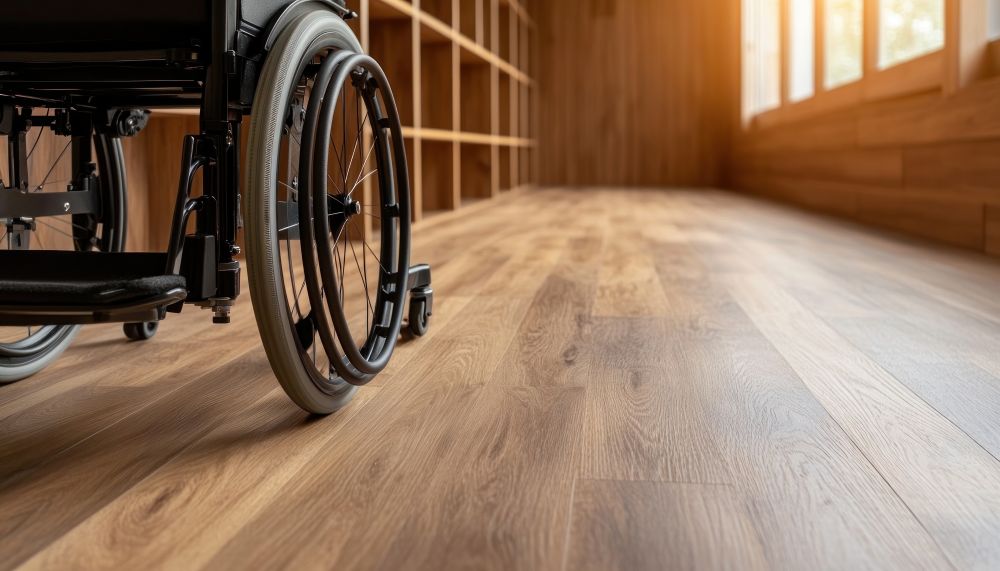
- Floor surface requirements: All floor surfaces must be stable, firm, and slip-resistant. This is particularly crucial in areas prone to moisture, like basements, bathrooms, and lobbies, where textured flooring surfaces like pumice, silica sand, and polymer frit can reduce risks while maintaining accessibility.
- Bathroom accessibility: ADA-compliant bathrooms require specific dimensions for turning space of at least 60 inches in diameter, accessible fixtures at prescribed heights, and appropriate grab bar installations. Single-user restrooms must be fully accessible, while larger facilities require a percentage of accessible stalls.
- Proper signage: ADA-compliant signage features high-contrast text, appropriate mounting heights, and tactile elements like braille. These elements ensure information is accessible to people with varying visual abilities.
- Elevator and vertical access: Multi-story buildings typically require elevators with specific dimensions, control panel requirements, and audible signals. Where elevators aren't feasible, ramps with proper slope ratios — typically 1:12 — and handrails provide an alternative.
- Parking and exterior areas: Accessible parking spaces must meet minimum size requirements, include access aisles, and be located closest to accessible entrances. Exterior routes from parking to entrances must be accessible without requiring travel behind parked vehicles.
- Accessible entrances and pathways: Entrances must be accessible to wheelchair users, with doorways at least 36 inches wide. Pathways should also be at least 36 inches wide, free from obstacles, and include passing spaces at regular intervals.
Practical Implementation Strategies for ADA Compliance
Successful ADA implementation begins in the planning phase. Construction teams should:
- Integrate accessibility from the start: Incorporating ADA requirements into initial designs is often more cost-effective than retrofitting. Review plans specifically for accessibility considerations before breaking ground.
- Train team members: Make sure everyone — from architects to on-site workers — understands the importance of ADA compliance and can identify potential issues during construction.
- Consult with experts: When in doubt, work with an accessibility consultant who specializes in ADA compliance. Their expertise can prevent costly mistakes and ensure thorough compliance.
- Utilize available resources: Take advantage of the ADA checklist, digital accessibility tools, government resources — like the U.S. Access Board’s guidelines and standards — and local building resources designed to guide construction teams through compliance requirements.
Building Accessible Environments for Everyone
ADA compliance represents a legal obligation and a commitment to inclusive design. By understanding and implementing accessibility requirements, construction teams create spaces that welcome all users.
When construction teams prioritize accessibility, they avoid potential legal issues and contribute to a more equitable environment. The best buildings are usable by everyone who encounters them.
- Share This →