7 Types of Eco-Friendly Insulation Solutions for Sustainable Construction
Insulation is the first line of defense against energy loss
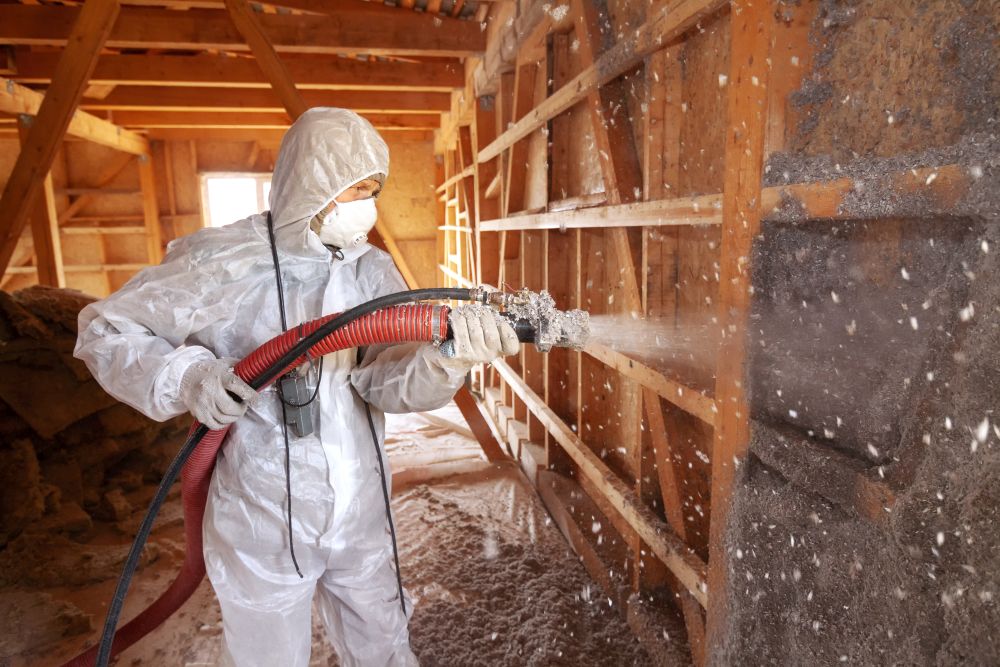
Insulation is the first line of defense against energy loss. What often gets missed is how the material shapes a project’s total carbon story, influences code approval timelines, and affects occupant health. Choosing smarter insulation lets you hit performance targets, satisfy clients, and future-proof your reputation in one spec sheet. Here are seven options to consider.
1. Cellulose
Cellulose fiber insulation contains up to 85% post-consumer newsprint that can seal air cavities and is then treated with non-hazardous chemicals that resist mold and pests. A Builders for Climate Action study showed that swapping conventional fiberglass for dense-pack cellulose can cut a home's embodied carbon footprint by roughly 60%.
Besides its R-value of 3.2 to 3.8 per inch, the material's fibers safely absorb and release moisture to help wall cavities dry out and reduce condensation risk. At the same time, its density gives it excellent sound-dampening qualities.
2. Sheep’s Wool
Wool batts manage humidity, absorbing moisture without losing R-value alongside formaldehyde and other volatile organic compounds (VOCs). In a chamber test of 44 mm-thick wool panels, researchers saw airborne formaldehyde fall by 68%-69% within 24 hours and stay lower over a seven-day cycle, confirming wool's keratin-driven chemisorption of common VOCs. Research also highlights its comparable thermal performance to mineral and fiberglass products — ideal for mixed-climate walls and roofs.
3. Denim (Cotton)
Recycled jeans batts run on 85% post-consumer cotton and are also excellent for soundproofing, so party walls and media rooms stay quiet. Technical testing of Quiet Denim batts reports a noise reduction coefficient of up to 1.15 and a sound transmission class of 52. Handling is itch-free, but installers should plan for the material's higher density, which makes cutting and fitting slower and keeps prices about 10%-50% above fiberglass — a gap some state green-building rebates already offset.
4. Cork Boards
Cork is harvested every nine years without felling the tree, yielding R-3.6-4.0 per inch in rigid boards. It meets European fire safety standards without added chemicals, making it a rare install-and-forget continuous insulation layer. Cork's water resistance, low permeability, and ability to spring back under pressure come primarily from suberin — the waxy substance in its cell walls. Additional extractives — roughly 5.8% non-polar and 10.4% polar compounds — reinforce those traits and give cork natural protection against moisture, gases, and biological decay.
5. Hemp Fiber
Hemp insulation sequesters more than twice its weight in CO2 over the plant’s cycle, giving the finished product a net-negative footprint. A 2025 Georgia Tech study notes that scaled-up hemp manufacturing could cut building sector emissions and lead to a 90% reduction in insulation's environmental impact. Domestic hemp batts may also replace fiberglass with roughly double the cost today — an investment federal incentives could quickly narrow.
6. Mineral Wool
Slag wool varieties contain 70% recycled blast-furnace slag and have dense fiber matrices that resist mold without added biocides. They can also shrug off temperatures well above 1,000 degrees Fahrenheit, making them a go-to for non-combustible facades and fire-stop details. Their rigidity improves acoustic ratings and maintains drainage planes in ventilated rain screens without additional spacers.
7. Plant-Based and Recycled Foam Boards
Soy and castor oil spray foams such as SealTite PRO OCX carry USDA BioPreferred certification and hit closed-cell performance benchmarks without ozone-depleting agents. For rigid panels, recycled PET cores like ArmaPET Eco50 turn waste into boards with solid thermal conductivity and a circular economy. Substituting bio-based or recycled content foams for conventional petrochemical boards can trim insulation-related embodied carbon by 50% while still delivering the high R-values and air-sealing performance closed-cell foams are known for.
Why Performance and Proof Matter
The International Energy Agency reports that building operations plus materials generated about one-third of global energy-related CO2 emissions in 2022. At the same time, the green-building materials market hit $422 billion in 2023 and is projected to more than triple by 2032, proving that clients will pay for lower-carbon envelopes. Insulation carries an outsized share of embodied carbon, so swapping in low-impact alternatives offers some of the fastest climate wins on any project.
Insulation must do more than hit the right R-value to deliver those wins. The U.S. Environmental Protection Agency defines “greener” insulation as material that pairs climate-appropriate thermal performance with reduced toxics and VOCs, recycled or rapidly renewable inputs, low embodied energy, responsibly sourced feedstocks, and credible end-of-life reuse or recycling pathways.
Roadblocks and Envelope Synergy
Upfront cost premiums, skills gaps, and evolving codes still slow adoption. Regulatory missteps can be costly. In many parts of the U.S., failing to meet the LEED Plus Standard or Stretch Code can trigger permit revocation or heavy fines, so documented compliance and transparent product data are critical.
Envelope details matter just as much as the insulation you specify. Durable, airtight cladding systems like aluminum siding flex with daily temperature swings without cracking or becoming brittle. By staying intact, they block wind-driven rain, keep the wall cavity dry, and preserve the full R-value of the insulation you worked hard to select.
Federal incentives can absorb much of the upfront premium. The Inflation Reduction Act’s expanded 45L credit offers builders up to $5,000 per DOE Zero Energy Ready home, while the revamped 179D deduction returns as much as $5 per square foot for commercial envelopes that cut energy use by at least 25%.
Keep the Momentum Going
Treat insulation as a strategic lever, not just cavity filler. When you match each product’s strengths — R-value, moisture response, embodied carbon profile — to your climate zone and assembly type, you lock in long-term energy savings, minimize regulatory risk, and hand clients a building envelope that earns its keep from day one. Collect the environmental data up front and document it clearly, and your projects will stand out in an increasingly carbon-conscious market.
- Share This →